
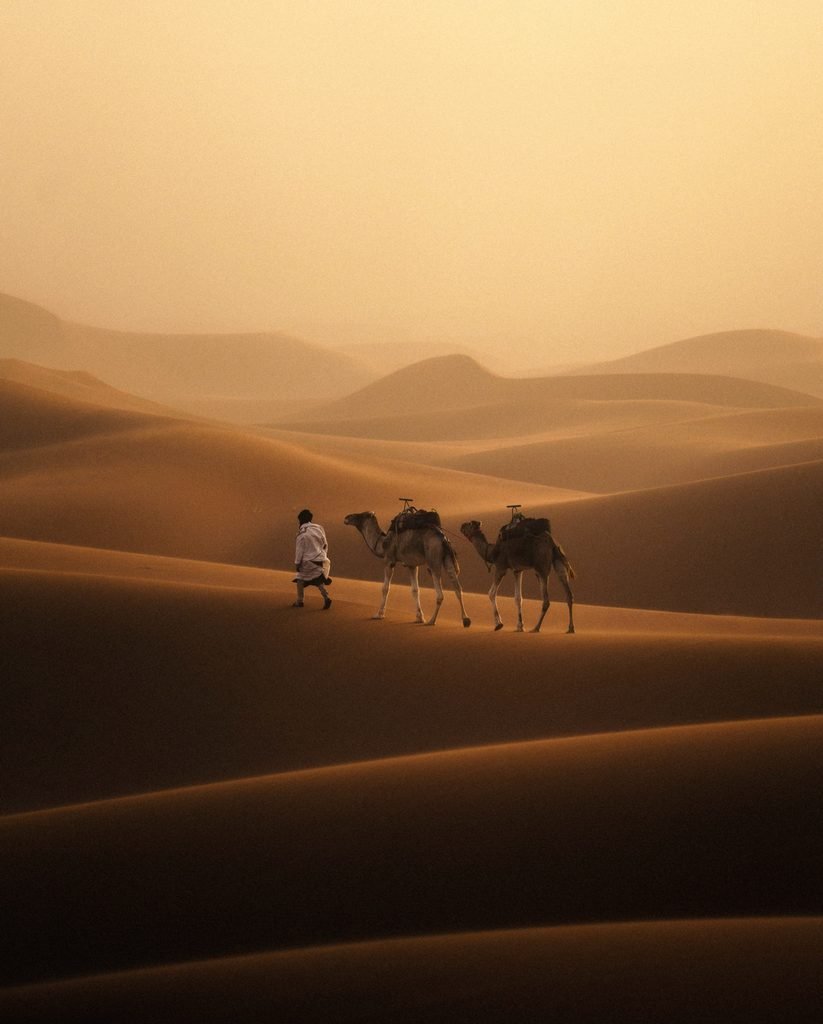
A Marrakech to Sahara desert tour is far more than a night among the dunes. The journey crosses the High Atlas Mountains, passes fortified villages and green valleys, follows ancient caravan routes and gradually reveals the scale of southern Morocco.
The Sahara cannot be reached from Marrakech on a quick day trip. The great dune regions lie far beyond the mountains, and the road deserves time. For most travelers, three days is the practical minimum for Merzouga, while four or five days creates a more relaxed and immersive experience.
This guide explains the main routes, the difference between Merzouga and Erg Chigaga, what happens each day and how to choose a desert tour that feels personal rather than rushed.
How far is the Sahara Desert from Marrakech?
Merzouga, the gateway to the Erg Chebbi dunes, lies on the far side of the High Atlas and the valleys of southeast Morocco. The drive is long, so responsible itineraries divide it into stages. A typical route includes an overnight stop around the Dades Valley before reaching the desert on the second day.
Erg Chigaga is approached farther south, beyond the Draa Valley and the end of the paved road. Its remote setting creates a wilder feeling, but reaching the dunes requires additional off-road travel.
The distance is exactly why the route matters. Aït Benhaddou, Ouarzazate, the Valley of the Roses, Dades and Todgha are not filler stops; they are distinct chapters in the geography and culture of southern Morocco.
Merzouga or Erg Chigaga: which desert should you choose?
Merzouga and Erg Chebbi
Merzouga is the most established gateway to Morocco’s large sand dunes. Erg Chebbi rises close to the village, which makes camel treks, private camps and 4×4 activities relatively accessible. It is a strong choice for a first desert journey, especially within a three- to five-day itinerary from Marrakech.
Choose Merzouga if you want:
- A classic camel trek across tall dunes
- A broad choice of standard or luxury camps
- A route through Dades and Todgha Gorges
- A desert experience that fits into a shorter itinerary
Erg Chigaga
Erg Chigaga feels more remote. The journey generally continues through the Draa Valley toward M’Hamid before leaving paved roads behind. The longer approach is part of its appeal: fewer buildings, wide horizons and a stronger sense of entering deep desert landscapes.
Choose Erg Chigaga if you want:
- A more remote desert atmosphere
- A longer 4×4 approach across varied terrain
- More time in the Draa Valley and southern oases
- An itinerary of four or five days rather than the fastest possible route
Both deserts can offer silence, changing light and extraordinary night skies. The right choice depends on your available time, comfort expectations and appetite for remoteness.
Is a 3-day desert tour from Marrakech enough?
Three days and two nights is enough for a well-organized introduction to Merzouga. It is also a fast journey with substantial driving, especially on the return to Marrakech. Travelers should understand the pace before booking.
A typical three-day private itinerary looks like this:
Day 1: Marrakech, High Atlas, Aït Benhaddou and Dades
Leave Marrakech in the morning and climb toward the Tizi n’Tichka Pass. The road crosses changing mountain scenery before reaching Aït Benhaddou, a historic ksar built in earthen architecture. After time to explore and eat lunch, continue through Ouarzazate and the Valley of the Roses toward the Dades region.
Spending the night in a traditional riad breaks the journey and allows you to experience the valleys rather than driving straight through them.
Day 2: Dades, Todgha Gorges and the Erg Chebbi dunes
After breakfast, continue toward the dramatic Todgha Gorges and the desert towns of the southeast. On arrival near Merzouga, leave the road behind and travel toward camp by camel or 4×4, depending on your preference and conditions.
The evening is the emotional center of the journey: sunset over the dunes, dinner at camp, traditional music and a sky that feels much larger than it did in the city.
Day 3: sunrise and return to Marrakech
Wake early for the changing colors of sunrise, have breakfast and return from camp. The drive back to Marrakech is long. A private vehicle allows for comfort stops and some flexibility, but travelers who dislike long road days should add a fourth night or finish in Fes when their wider itinerary permits.
This route forms the foundation of our Sahara Soul tour from Marrakech, with options adapted to group size and comfort level.
Why four or five days can be better
Adding time changes the journey from an efficient desert visit into a deeper exploration. A longer itinerary can include a slower return, a second desert night, more time with local communities or an alternative route through the Draa Valley.
Consider four or five days if you want to:
- Reduce the length of the final driving day
- Spend a full day exploring the desert by 4×4
- Visit seasonal nomadic settlements respectfully with a local guide
- Try sandboarding without rushing the sunset experience
- Listen to Gnawa music in the Merzouga region
- Add oasis walks, markets or fossil landscapes
- Enjoy two nights in different types of accommodation
If cultural exchange is your priority, see our Nomadic Souls experience, designed around respectful time with a nomadic Amazigh family.
What happens at a Sahara desert camp?
Desert camps range from simple Amazigh-style tents to luxury tents with private bathrooms. “Luxury” can mean different things from one camp to another, so ask exactly what is included.
A well-planned stay usually includes:
- Transfer to camp by camel or 4×4
- Time to watch sunset away from the vehicles
- Dinner and breakfast
- Traditional music around a fire when conditions allow
- Bedding suitable for the season
- Clear information about bathrooms and hot water
The best camp is not automatically the most elaborate. Privacy, location, local hospitality and time to appreciate the landscape often matter more than decorative details.
When is the best time for a Sahara tour?
Autumn through spring is generally the most comfortable period for desert travel. October, November, March and April are especially popular because they can combine pleasant city exploration with desert activities. Winter days may be bright and comfortable, but nights can be surprisingly cold.
Summer desert travel requires careful planning around intense heat. If your dates fall in July or August, discuss the route honestly with a local specialist. Earlier departures, air-conditioned private transport and adjusted activity times are essential.
For a broader seasonal comparison, read our guide to the best time to visit Morocco.
What to pack for a Morocco desert tour
- Light layers: temperatures change quickly between the vehicle, sunset and night
- A warm jacket: essential in winter and useful in every season
- Closed walking shoes: more stable than sandals on sand and rocky ground
- Sun protection: hat, sunglasses and sunscreen
- A scarf: useful for sun and windblown sand
- A small overnight bag: easier to take to camp than a large suitcase
- Personal essentials: medication, power bank and a reusable water bottle
Avoid overpacking. Your driver or guide can explain what remains safely in the vehicle and what you should carry to camp.
How to choose an authentic desert tour
Look beyond the lowest price
A very low price may mean large groups, rushed stops, distant camps or limited support. Compare the vehicle, accommodation, meals, camp location, guide involvement and whether entrance fees or local visits are included.
Ask who benefits locally
Desert tourism should support the people who make the experience possible. Ask whether the company works with local drivers, guides, camps, guesthouses and families. Respectful encounters should never feel staged or intrusive.
Choose a private or small-group pace
A private journey allows photo stops, meal breaks and walking time to reflect your interests. It is particularly valuable for families, couples and travelers who want to understand the places between Marrakech and the dunes.
Confirm the details before departure
Make sure you know the exact desert region, total duration, daily driving rhythm, camp category, room setup, meals, pickup location and return city. Clear planning prevents most disappointments.
Travel from Marrakech to the Sahara with local experts
Nomadic Legacy Tour was founded by guides raised in Morocco’s mountains and nomadic traditions. Our private journeys are built around local knowledge, personal connection and carefully selected accommodation—from traditional riads to desert camps.
View the Sahara Soul itinerary, explore all Morocco tours, or request a tailor-made desert tour based on your dates and preferred pace.
Frequently asked questions
Can you visit the Sahara from Marrakech in one day?
No. The major dune regions at Erg Chebbi and Erg Chigaga are too far from Marrakech for a meaningful day trip. Allow at least three days for Merzouga and preferably four or five days for a more relaxed journey.
Is Merzouga worth the long drive?
Yes, if you treat the road as part of the experience. The High Atlas, Aït Benhaddou, valleys, kasbahs and gorges make the route memorable before you reach the dunes.
Do I have to ride a camel?
No. Most private desert tours can arrange a 4×4 transfer to camp. Tell your tour designer about mobility concerns or personal preferences before departure.
Are Sahara desert camps comfortable?
Comfort varies widely. Standard camps offer a simpler experience, while luxury camps may provide larger beds and private bathrooms. Confirm the exact facilities, especially in winter or when traveling with children.