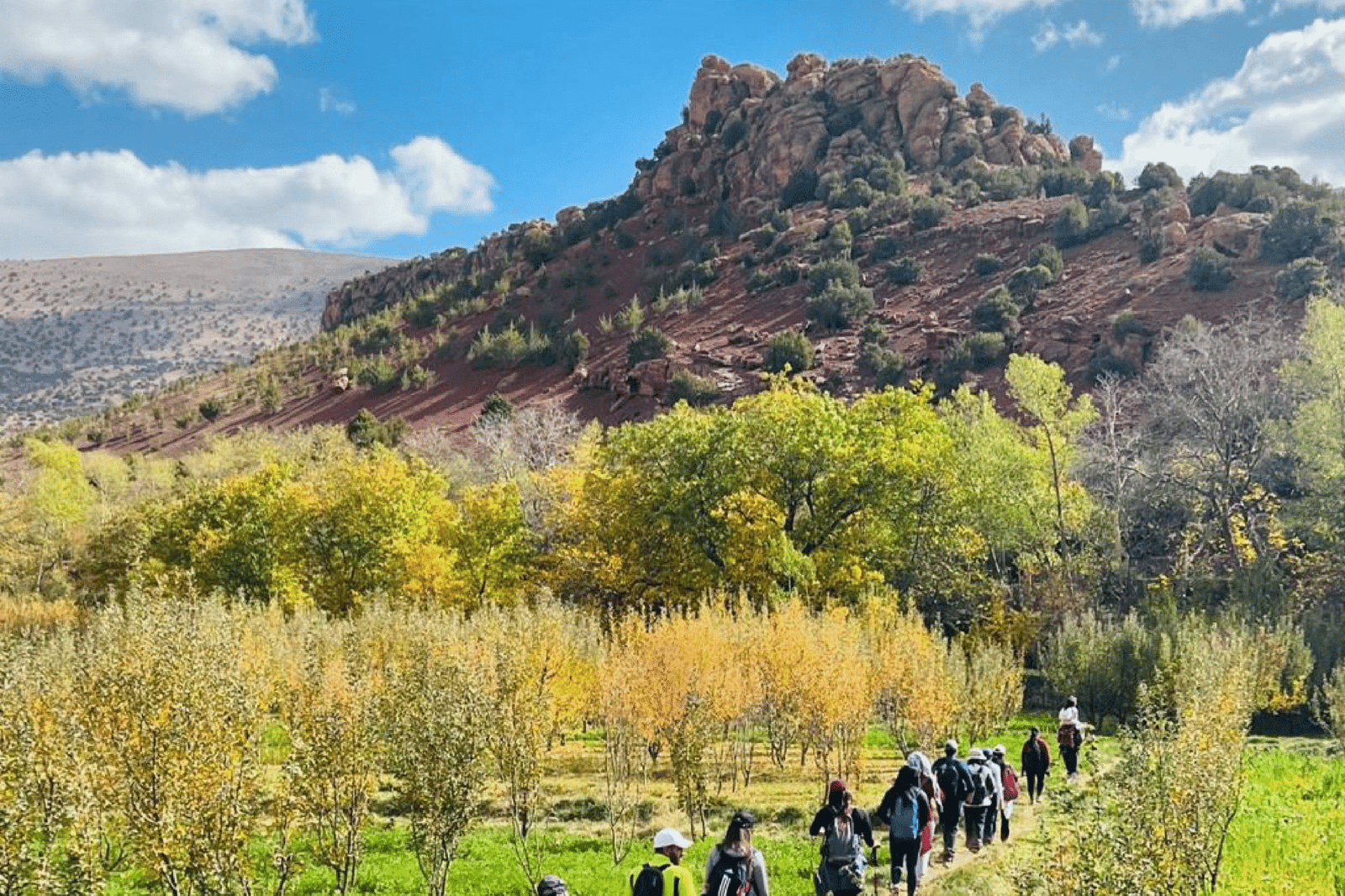
January can be excellent for cultural touring and desert travel if you pack for cool evenings. Days may feel bright and mild in the south, but temperatures can fall quickly after sunset. Snow is possible in the High Atlas, and summit trekking becomes a winter-mountaineering experience rather than a standard hike.
February: a calm transition toward spring
February remains relatively quiet in many places. The desert is often appealing during the day, while mountain conditions vary by elevation. It is a good month for travelers who prefer a slower pace and do not mind carrying layers for changing temperatures.
March: spring begins to open the country
March marks the beginning of one of Morocco’s most attractive travel periods. Landscapes become greener in many regions, city walks feel comfortable and the south remains inviting. Conditions in the highest mountains still need to be checked locally.
April: a favorite month for varied itineraries
April is well suited to journeys that connect Marrakech, the Atlas foothills, ancient kasbahs and the Sahara. It is also a popular period, so booking private transport, guides and distinctive accommodations in advance is wise.
May: warm days and broad possibilities
May offers long days and generally good conditions across much of the country. The mountains, cities and coast can all fit into one itinerary. Desert temperatures begin to rise, making thoughtful timing increasingly important.
June: move toward the mountains and coast
June brings hotter conditions inland. Early starts, relaxed afternoons and carefully selected accommodations improve the experience. The High Atlas and Atlantic coast become particularly attractive, while desert travel should be planned with local knowledge.
July: summer heat and high-altitude escapes
July can be very hot in Marrakech and southern Morocco. The best itineraries avoid rushing and focus on places where elevation or ocean air provides relief. This is a strong month for mountain journeys when the chosen route matches your ability.
August: coastal energy and deliberate pacing
August is popular on the coast and hot in the interior. Families traveling during school holidays can still enjoy Morocco, but the route should include realistic driving times, shaded breaks and activities scheduled for cooler hours.
September: one of the most flexible months
As the strongest summer heat begins to ease, September opens more options across the country. It can work well for a combined city, mountain and desert itinerary, particularly later in the month.
October: excellent for the Sahara and cultural travel
October is one of the best times to visit Morocco for a varied journey. It suits medina walks, road trips across the Atlas and nights in the desert. Because demand can be high, early planning gives you a better choice of riads and camps.
November: softer light and a quieter rhythm
November is a rewarding month for photography, culture and the Sahara. The days shorten and evenings cool, but many travelers appreciate the more peaceful atmosphere. Layered clothing is important.
December: winter sun and festive travel
December can combine sunny daytime exploration with cold nights in the mountains and desert. The holiday period is popular, so reserve early if your dates are fixed. A private itinerary makes it easier to adapt the pace to winter daylight.
How to choose the right season for your trip
For a first visit to Morocco
Choose spring or autumn if you want to see several regions in one journey. These seasons make it easier to combine an imperial city, an Atlas experience and the Sahara without designing the whole itinerary around temperature extremes.
For a Sahara-focused journey
Plan between autumn and spring. Decide whether you prefer the sculpted dunes of Erg Chebbi near Merzouga or the wilder approach to Erg Chigaga. Allow enough time to appreciate the route: the valleys, kasbahs and mountain passes are part of the experience, not simply the road to the dunes.
For trekking and Amazigh village encounters
Match the season to the altitude. A gentle valley walk and a Toubkal summit require different preparation. Local guides understand trail conditions, water availability, village logistics and how the weather changes from one valley to another.
For families
Spring and autumn usually allow the greatest flexibility. Keep daily driving realistic, include rest time and select accommodations with the right room configuration. In summer, consider a route that balances Marrakech with the Atlantic coast or mountain valleys.
What to pack in every season
- Breathable layers that can be added or removed during the day
- A warm layer for desert and mountain evenings
- Comfortable walking shoes with reliable grip
- Sun protection: hat, sunglasses and sunscreen
- A light scarf for sun, dust and respectful visits
- A reusable water bottle
- A compact rain layer, particularly in cooler or transitional months
- Any personal medication you may need
For a trek, add route-specific equipment recommended by your mountain guide. For a desert camp, bring a small overnight bag so your main luggage can remain in the vehicle when appropriate.
Plan your Morocco journey around what matters to you
The right month is only one part of a memorable trip. Your travel style, preferred comfort, walking ability, group size and curiosity should shape the route. Nomadic Legacy Tour was created by local guides raised in Morocco’s Amazigh communities, with more than 14 years of experience sharing the country through personal, respectful journeys.
Explore all Morocco tours, or start a custom tour designed around your dates, interests and pace.
Frequently asked questions
What is the cheapest time to visit Morocco?
Prices vary by city, accommodation and international travel dates. Periods outside major holidays and the busiest spring and autumn weeks may offer more choice. A flexible departure date can help, but the lowest price should still be balanced with suitable weather for your chosen regions.
What is the best month to visit Marrakech and the Sahara?
March, April, October and November are often excellent choices for combining Marrakech with the Sahara. They generally provide a comfortable balance for city exploration, mountain crossings and desert activities.
Is Morocco too hot in summer?
Some inland and southern regions can be intensely hot in July and August, but Morocco remains a year-round destination when the itinerary is designed carefully. The Atlantic coast, higher mountain valleys, early activities and a slower pace can make summer travel enjoyable.
Can I visit the Sahara in winter?
Yes. Winter can offer clear days and beautiful light in the Sahara, but nights may be very cold. Choose suitable camp comfort and pack warm layers, including for sunrise and evening activities.