
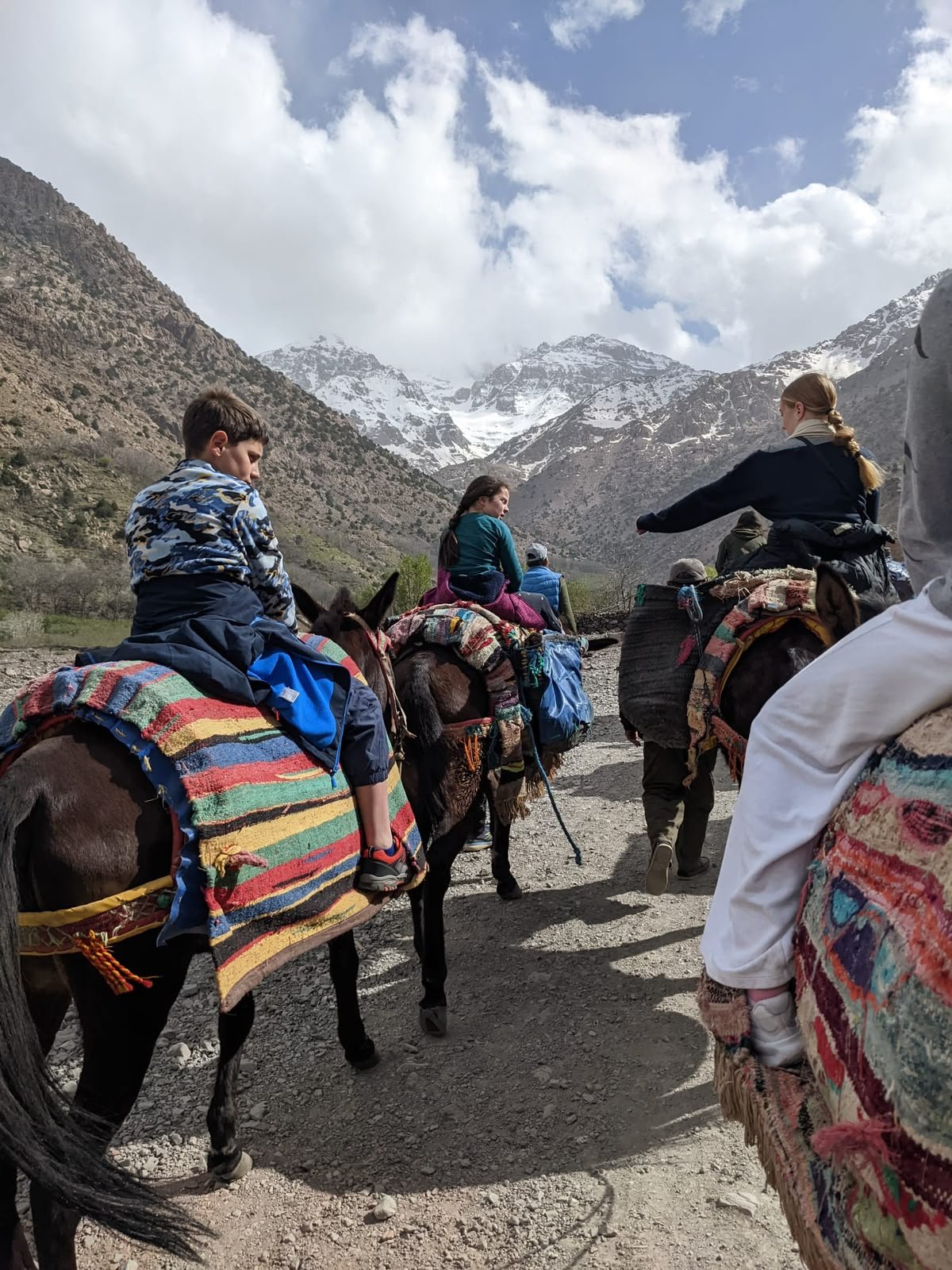
High Atlas trekking in Morocco is not only about reaching a summit. It is a journey through walnut groves, high passes, terraced fields and Amazigh villages where mountain life follows a rhythm shaped by season, altitude and community.
Less than a day from the energy of Marrakech, the landscape changes completely. Roads narrow into valleys, footpaths connect earth-built villages and the peaks rise above cultivated slopes. You can come for a gentle day walk, a multi-day village trek or the challenge of Mount Toubkal, the highest mountain in North Africa.
This guide will help you choose the right route, season and level of support for a safe and meaningful Atlas Mountains trek.
Why trek in Morocco’s High Atlas Mountains?
The High Atlas offers a rare combination of accessible adventure and living culture. The mountains are close enough to Marrakech for a short escape, yet a few hours on foot can take you far beyond the pace of the city.
Travelers choose the High Atlas for:
- Mountain scenery ranging from green valleys to rugged high-altitude terrain
- Trails linking traditional Amazigh villages
- Guesthouse stays and meals prepared by local hosts
- Experienced regional guides, muleteers and cooks
- Routes for casual walkers, regular hikers and summit seekers
- A deeper understanding of Morocco beyond its famous cities
The most memorable treks balance movement with time to listen, drink mint tea and understand how families have adapted to life in these valleys.
Where should you trek in the High Atlas?
Imlil and the Aït Mizane Valley
Imlil is the best-known gateway to Toubkal National Park. Surrounded by villages and footpaths, it works for day walks as well as longer expeditions. Nearby Aroumd is a natural first stop on routes climbing deeper into the mountains.
Choose the Imlil area if you want straightforward access from Marrakech, flexible walking options and the possibility of building toward a Toubkal ascent.
The Imnan Valley
Routes over the Tizi n’Tamatert Pass open views into the Imnan Valley and connect villages such as Tinghrine and Ikkiss. This area suits travelers who want a multi-day trek focused on scenery and village life rather than only on a summit.
The Azzaden Valley
The Azzaden Valley is known for terraced slopes, walnut groves, waterfalls and villages including Aït Aissa and Tizi Oussem. It can be linked with Imlil and the Toubkal approach to create a varied circular journey.
Mount Toubkal
Mount Toubkal rises to 4,167 metres. The standard ascent is not a casual day hike: the altitude, elevation gain, trail conditions and early summit start require preparation. In winter, snow and ice turn it into a mountaineering objective that may require crampons, an ice axe and relevant experience.
A summit should never be treated as the only measure of success. Weather, health and guide judgment may change the plan. The journey through the valleys and time with the local team remain valuable even when the highest point is not reached.
Choose the right type of Atlas trek
A day walk from Marrakech
A day trip can introduce you to mountain villages, local food and lower trails. It is ideal if your Morocco itinerary is short or if you want to test your comfort before committing to several days.
Ask how much of the day is spent driving and how much is spent walking. A good day trip should not reduce the mountains to a photo stop.
A two- or three-day village trek
A short multi-day route creates a stronger sense of place. You can sleep in a village guesthouse, cross a pass and experience early morning in the valley after day visitors have left. These treks can often be adjusted for families or moderate walkers.
A four- to six-day circuit
With more time, you can connect the Imnan and Azzaden valleys, use mule support and include a night near the Toubkal refuge. The route becomes a complete journey rather than an out-and-back hike.
Our Atlas Heights journey follows this spirit over five days, combining Aroumd, high passes, remote villages, Tizi Oussem and an optional Toubkal summit.
A dedicated Toubkal trek
If the summit is your main goal, your itinerary should prioritize acclimatization, fitness and appropriate equipment. Adding a valley day before the final ascent can make the experience richer and may help your body adjust to altitude.
Sample 5-day High Atlas trekking itinerary
Day 1: Marrakech to Imlil and Aroumd
Travel privately from Marrakech to Imlil, meet your mountain guide and mule team, and begin walking toward Aroumd. The first day is an opportunity to settle into the pace of the trail, learn how the support team works and enjoy a home-cooked evening meal.
Day 2: Tizi n’Tamatert and the Imnan Valley
Climb steadily toward the pass, pausing as views open across the valley. Descend through village landscapes toward Tinghrine and Ikkiss. The walking is only one part of the day; tea, conversation and the changing architecture reveal how altitude shapes everyday life.
Day 3: Azzaden Valley and Tizi Oussem
Cross another mountain pass and continue through Matate and Aït Aissa toward Tizi Oussem. Waterfalls and walnut groves soften the rugged surroundings, creating a different atmosphere from the previous valley.
Day 4: Trek to the Toubkal refuge
Gain elevation toward the refuge or base camp. The terrain becomes more austere and the air thinner. After arrival, rest, eat and prepare equipment for the early start. Your guide will assess conditions and discuss whether the summit attempt remains appropriate.
Day 5: Optional Toubkal summit and return
Begin before sunrise if conditions allow. The climb is sustained, and pacing matters more than speed. From the summit area, the High Atlas unfolds in every direction. Descend to the refuge, continue toward Imlil and transfer back to Marrakech.
This outline is flexible. Weather, group ability and trail conditions may require a different valley, overnight stop or summit decision.
What is the best time for High Atlas trekking?
Spring and autumn suit many village circuits and lower routes. Summer can be excellent at elevation when early starts help avoid the strongest sun. Winter trekking is possible, but high routes and Toubkal may require technical snow equipment and a different level of experience.
- March to May: green valleys and comfortable walking on many lower routes; snow may remain high
- June to August: generally clearer high routes, with hot lower valleys and strong sun
- September to November: stable-looking days are common, with cooler nights as the season advances
- December to February: rewarding for properly equipped winter trekkers; high-mountain conditions can be serious
Weather in the mountains can change quickly in any season. Check conditions with a local guide rather than relying only on a city forecast. See our month-by-month Morocco guide for a regional comparison.
How fit do you need to be?
You do not need to be an athlete for every Atlas trek. The correct route depends on how often you walk, your experience on uneven ground and how your body handles consecutive days.
Before a multi-day trek:
- Walk regularly for several weeks, including hills or stairs
- Practice on uneven paths in the shoes you will bring
- Carry a light daypack during training
- Build up to two walking days in a row
- Tell your guide about injuries, health conditions or altitude concerns
For Toubkal, prepare for a long summit day and significant ascent and descent. Strong general fitness helps, but patient pacing, hydration and acclimatization are equally important.
Do you need a guide for the Atlas Mountains?
A qualified local mountain guide adds far more than navigation. Guides monitor conditions, adjust the pace, coordinate accommodation and mule support, communicate with hosts and explain the culture of the valleys.
Access rules and checkpoints can change, and some routes or protected areas require accredited guidance. Confirm the current requirements when you book. Even where independent walking is possible, a guide is strongly recommended for remote or high-altitude routes.
Local support also makes your trek more comfortable:
- Muleteers transport main luggage on suitable routes
- Cooks prepare fresh meals during multi-day journeys
- Guesthouse hosts provide accommodation and local knowledge
- Drivers coordinate safe transfers between Marrakech and the trailhead
What to pack for an Atlas Mountains trek
- Broken-in hiking shoes or boots with good grip
- Comfortable hiking socks and spare pairs
- Breathable base layers
- A warm fleece or insulated layer
- A windproof and waterproof outer layer
- Sun hat, sunglasses and sunscreen
- A small daypack and reusable water bottles
- Headlamp, personal medication and basic toiletries
- Trekking poles if you prefer extra stability on descents
- A modest change of clothing for villages and guesthouses
Your operator should provide a season-specific list. In winter, technical equipment may be essential. Do not assume that an item available “on request” will fit correctly without confirming in advance.
Guesthouses, refuges and meals
Village guesthouses are simple, welcoming and part of the cultural experience. Rooms and bathrooms may be shared, and heating can be limited. A mountain refuge is more functional, with dormitory-style sleeping and an early-night atmosphere shaped by summit plans.
Meals often include soups, salads, tagines, couscous, bread, fruit and mint tea. Tell your tour designer about vegetarian, vegan, allergy-related or medical dietary needs before the trek. Clear notice gives local cooks the best chance to prepare appropriately.
How to visit Amazigh villages respectfully
- Ask before photographing people, homes or daily work
- Dress with respect for rural communities
- Learn a few greetings from your guide
- Accept hospitality without treating private life as a performance
- Buy crafts directly when you genuinely value them
- Use water carefully and carry waste out of the mountains
The Atlas is not an outdoor playground separated from its residents. The trails pass through lived landscapes. Responsible trekking recognizes the knowledge, work and privacy of the communities that maintain them.
Plan your High Atlas trek with local guides
Nomadic Legacy Tour was founded by Moroccan guides raised in the High Atlas and shaped by Amazigh hospitality. Our mountain journeys combine experienced local leadership, private transfers, village accommodation, fresh meals and mule support where appropriate.
Discover the 5-day Atlas Heights itinerary, browse all travel experiences, or design a custom Morocco trek for your dates and ability.
Frequently asked questions
Can beginners trek in the High Atlas?
Yes. The region offers gentle valley walks and short village routes as well as demanding summit expeditions. Be honest about your fitness and choose an itinerary designed for your experience.
How many days do you need for the Atlas Mountains?
One day provides an introduction, two or three days allow a village-to-village experience, and five days can combine several valleys with an optional Toubkal ascent.
Can you climb Mount Toubkal without technical experience?
In dry, stable conditions, the standard route is a strenuous trek rather than a technical rock climb. Winter snow and ice can make it a mountaineering objective. Altitude and weather remain serious in every season, so local professional guidance is essential.
Is luggage carried during a multi-day trek?
On many routes, mules carry the main luggage while you walk with a daypack. Access and animal support depend on the trail, season and group plan, so confirm the arrangement before departure.